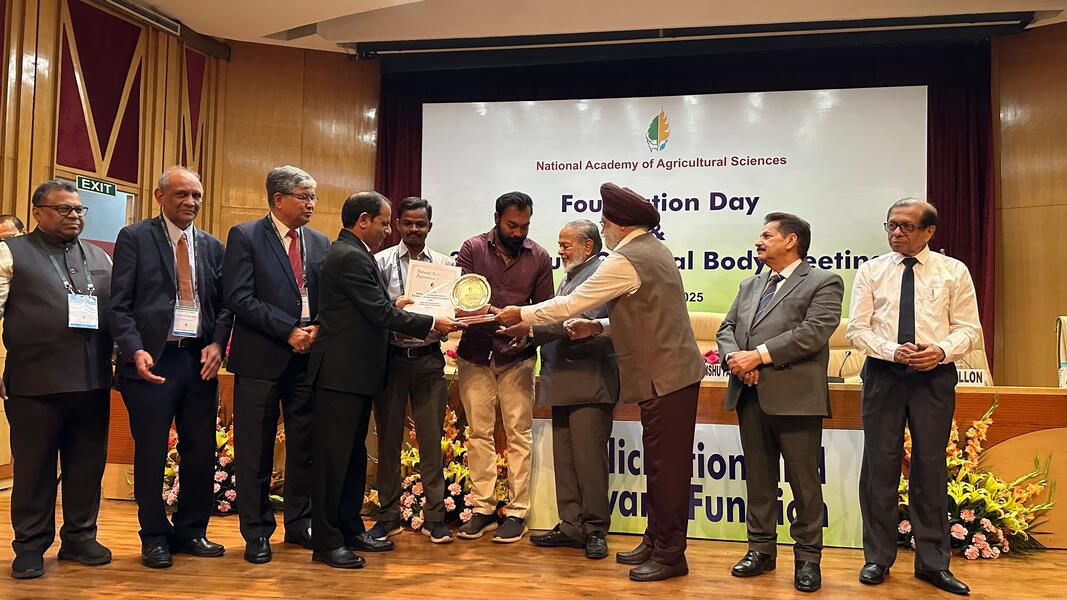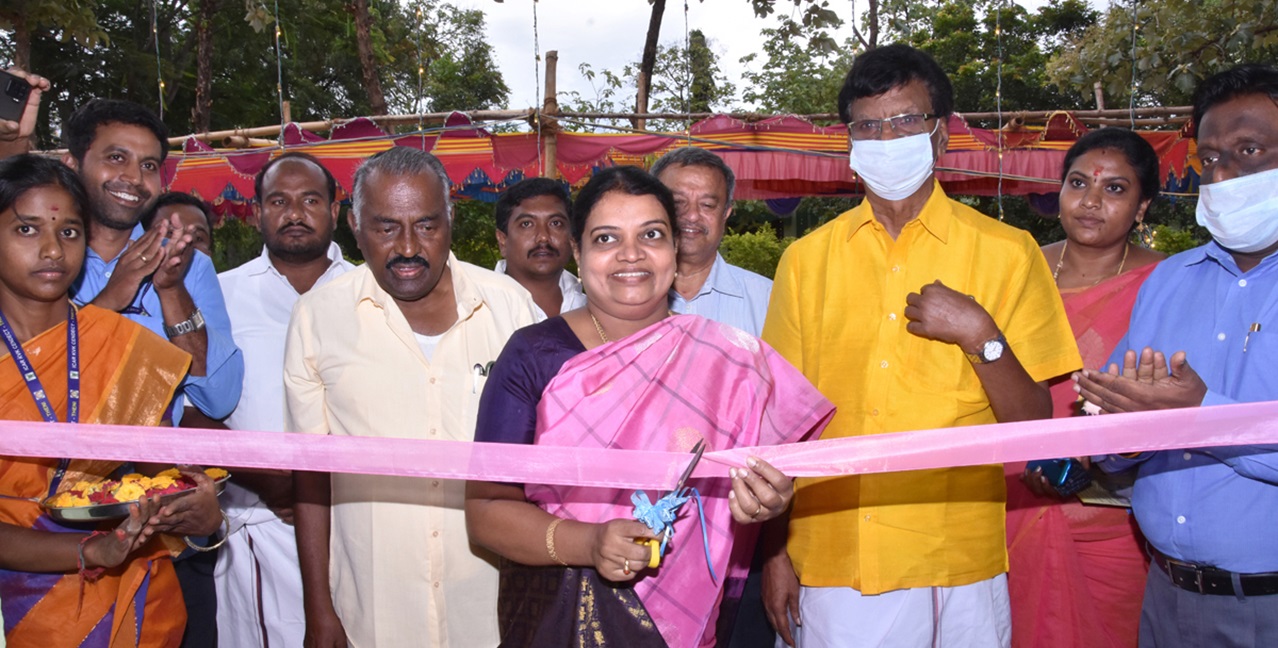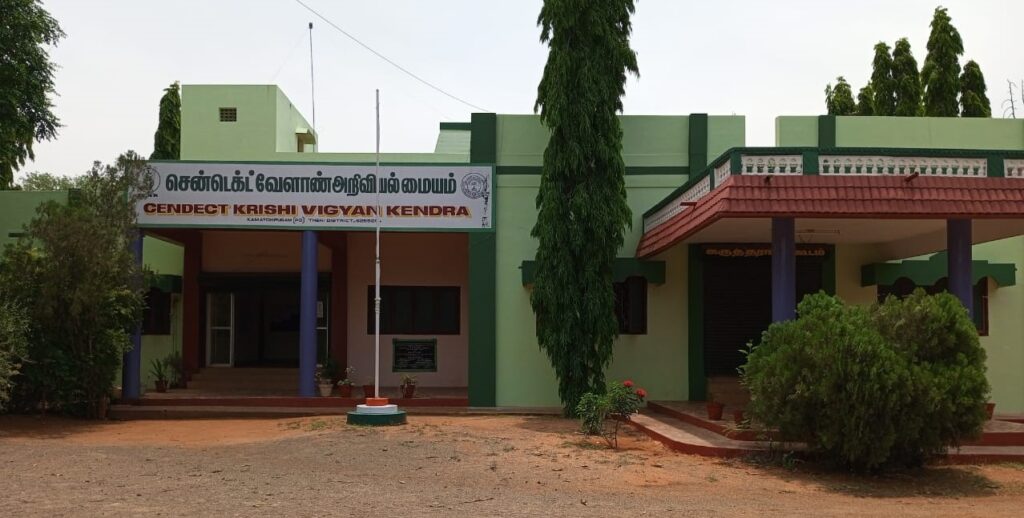
Krishi Vigyan Kendra (Farm Science Centre) in India is a unique system of technology transfer. Started its service on 21st March 1974 at Puducherry, the first KVK in India, grown to 731 KVKs in 2023. As the frontline extension system, KVKs have their footprint in every successful technology developed by institutions and adopted by farmers.... |
Hon’ble
Prime Minister
Hon’ble Minister of
Agriculture & Farmers Welfare
Secretary (DARE)
& Director General (ICAR)
![]() |
![]() |
![]() |
Indian Council of Agricultural Research (ICAR), Government of India mandated the establishment of Krishi Vigyan Kendras as grassroots level Farm Science Centres to provide various types of farm support activities like technology dissemination to farmers, training, awareness to achieve the set of objectives. KVK have made dent and has become part of decentralized planning and implementation instrument to achieve desired level of growth in agriculture and allied sector in the district.
KVK play a vital role in conducting on farm testing to demonstrate location specific agricultural technologies. KVK conducts demonstrations to prove the potential of various crops at farmers’ fields. Also conduct need based training programmes for the benefit of farmers and farm women, rural youths. KVK creates awareness about improved agricultural technologies through extension programmes. Critical and quality inputs like seeds, planting materials, organic products, bio fertilizers and livestock are produced by the KVK and made available to the farmers.
Technology assessment, refinement and demonstration of technology/products through the following activities of KVK.
- On-farm testing to identify the location specificity of agricultural technologies under various farming systems.
- Frontline demonstrations to establish its production potentials on the farmers’ fields.
- Training of farmers to update their knowledge and skills in modern agricultural technologies, and training of extension personnel to orient them in the frontier areas of technology development.
- To work as resource and knowledge centre of agricultural technology for supporting initiatives of public, private and voluntary sector for improving the agricultural economy of the district.
- In order to create awareness about improved technology, a large number of extension activities will be taken up.
- The seeds and planting materials produced by the KVKs will also be made available to the farmers.
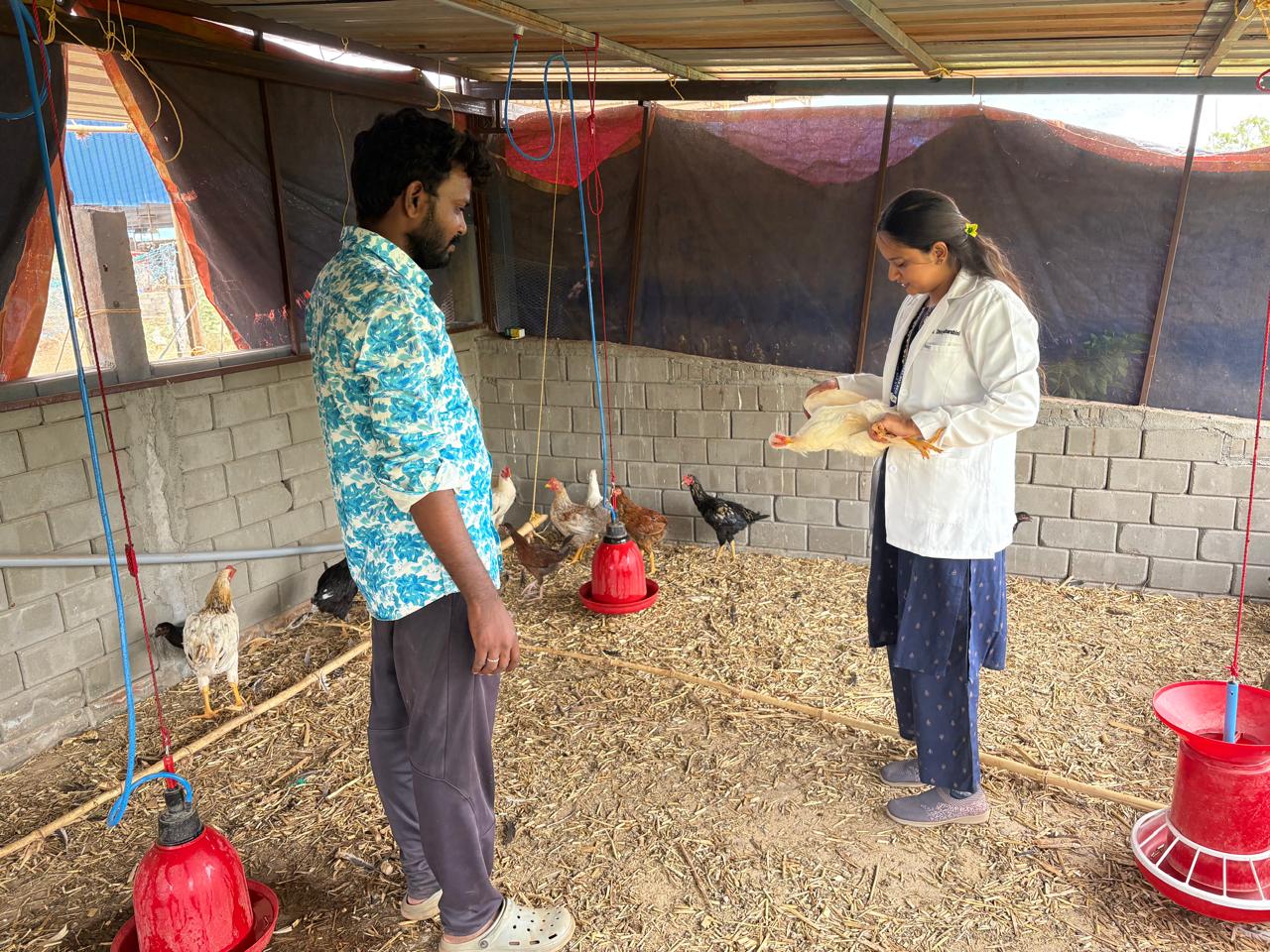
Field Visit to Backyard Poultry Farm
Event Details:
1. Conducted a field visit to a backyard poultry farm to assess the overall health and management practices of the flock.
2. Examined the birds for clinical signs of common poultry diseases and observed their general health status.
3. Evaluated housing conditions, ventilation, litter management, stocking density, and sanitation practices.
4. Assessed feeding and watering management and advised the farmer on providing a balanced diet, clean drinking water, and vitamin-mineral supplementation.
5. Verified the vaccination and deworming schedule and emphasized timely vaccination against major poultry diseases such as Newcastle Disease (Ranikhet) and Fowl Pox.
6. Recommended regular cleaning and disinfection of the poultry shed, proper disposal of litter, and strict biosecurity measures to prevent disease outbreaks.
7. Addressed the farmer’s queries regarding disease prevention, mortality reduction, and improved productivity
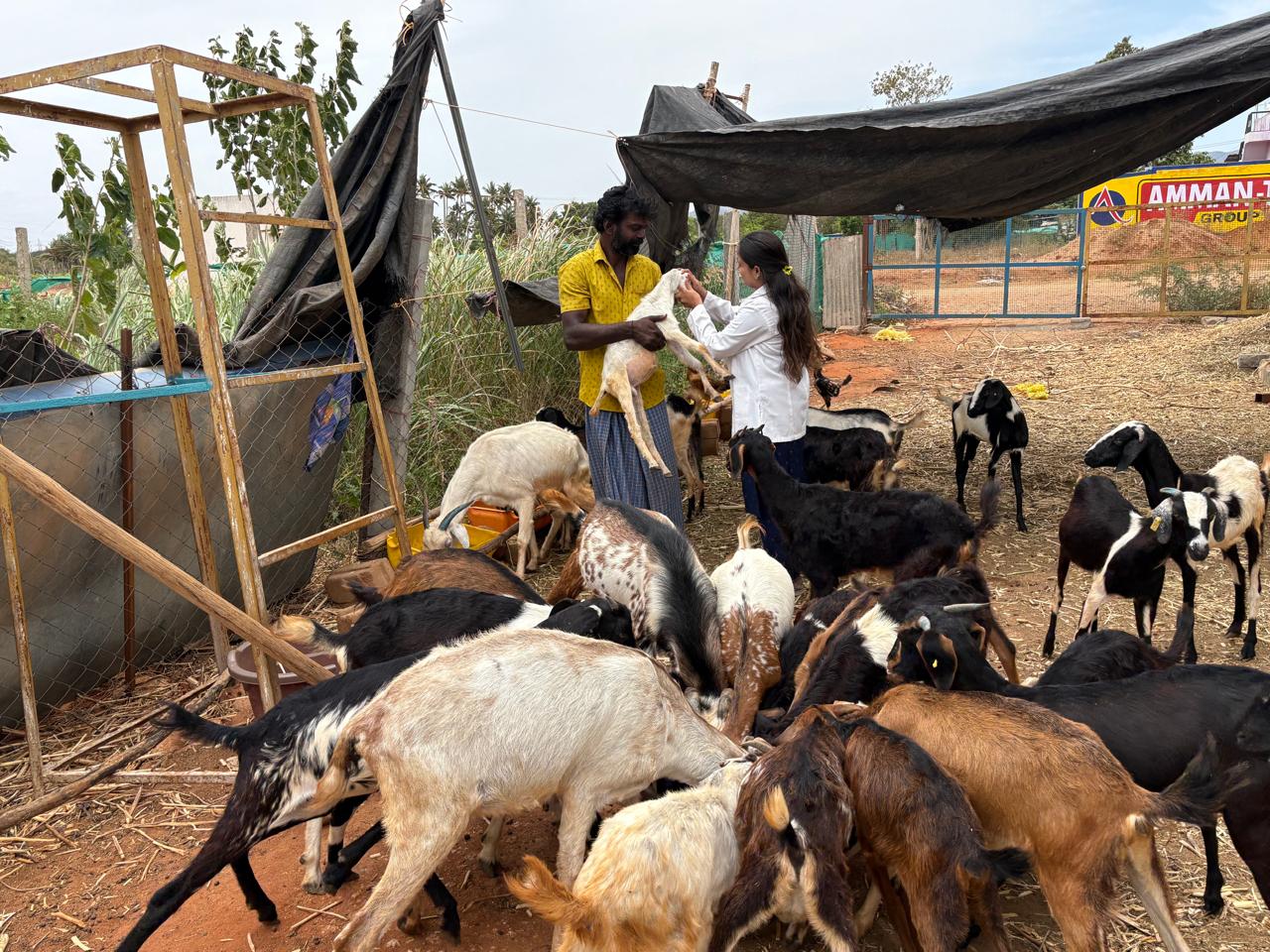
Field Visit to Goat Farm
Event Details:
1. Conducted a field visit to a goat farm to assess the health status and overall management practices of the flock.
2. Evaluated feeding practices, availability of green fodder, concentrate feeding, clean drinking water, and mineral supplementation.
3. Examined the goats for common health problems, body condition, external parasites, and signs of infectious diseases.
4. Verified the deworming and vaccination schedule and advised the farmer on timely vaccination against major diseases such as PPR, Enterotoxaemia (ET), and Goat Pox.
5. Recommended proper sanitation, biosecurity measures, regular health monitoring, and prompt isolation of sick animals to reduce disease incidence.
6. Interacted with the farmer, clarified queries on breeding, kid management, nutrition, and disease prevention, and provided technical guidance for improving productivity.