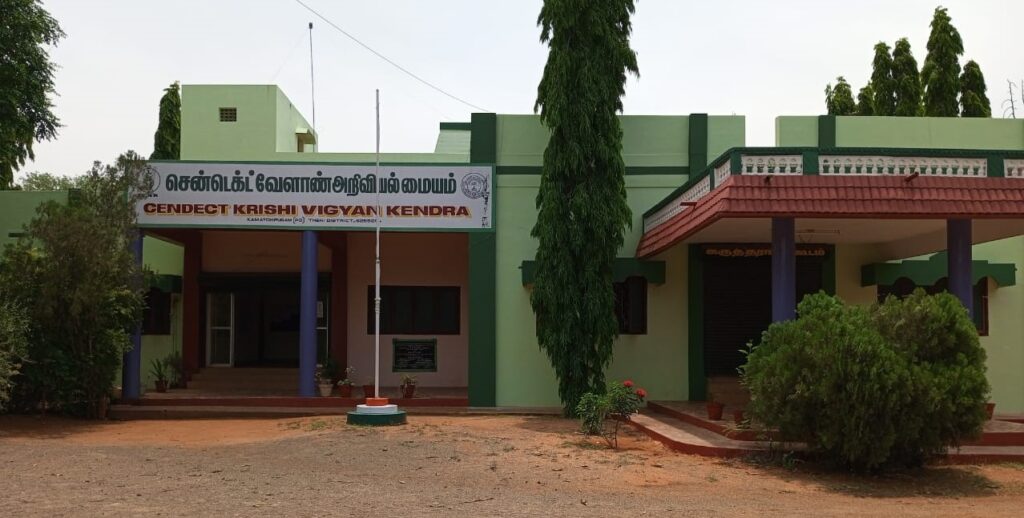
Krishi Vigyan Kendra (Farm Science Centre) in India is a unique system of technology transfer. Started its service on 21st March 1974 at Puducherry, the first KVK in India, grown to 731 KVKs in 2023. As the frontline extension system, KVKs have their footprint in every successful technology developed by institutions and adopted by farmers.... |
Hon’ble
Prime Minister
Hon’ble Minister of
Agriculture & Farmers Welfare
Secretary (DARE)
& Director General (ICAR)
![]() |
![]() |
![]() |
Indian Council of Agricultural Research (ICAR), Government of India mandated the establishment of Krishi Vigyan Kendras as grassroots level Farm Science Centres to provide various types of farm support activities like technology dissemination to farmers, training, awareness to achieve the set of objectives. KVK have made dent and has become part of decentralized planning and implementation instrument to achieve desired level of growth in agriculture and allied sector in the district.
KVK play a vital role in conducting on farm testing to demonstrate location specific agricultural technologies. KVK conducts demonstrations to prove the potential of various crops at farmers’ fields. Also conduct need based training programmes for the benefit of farmers and farm women, rural youths. KVK creates awareness about improved agricultural technologies through extension programmes. Critical and quality inputs like seeds, planting materials, organic products, bio fertilizers and livestock are produced by the KVK and made available to the farmers.
Technology assessment, refinement and demonstration of technology/products through the following activities of KVK.
- On-farm testing to identify the location specificity of agricultural technologies under various farming systems.
- Frontline demonstrations to establish its production potentials on the farmers’ fields.
- Training of farmers to update their knowledge and skills in modern agricultural technologies, and training of extension personnel to orient them in the frontier areas of technology development.
- To work as resource and knowledge centre of agricultural technology for supporting initiatives of public, private and voluntary sector for improving the agricultural economy of the district.
- In order to create awareness about improved technology, a large number of extension activities will be taken up.
- The seeds and planting materials produced by the KVKs will also be made available to the farmers.
FLD Training
Event Details:
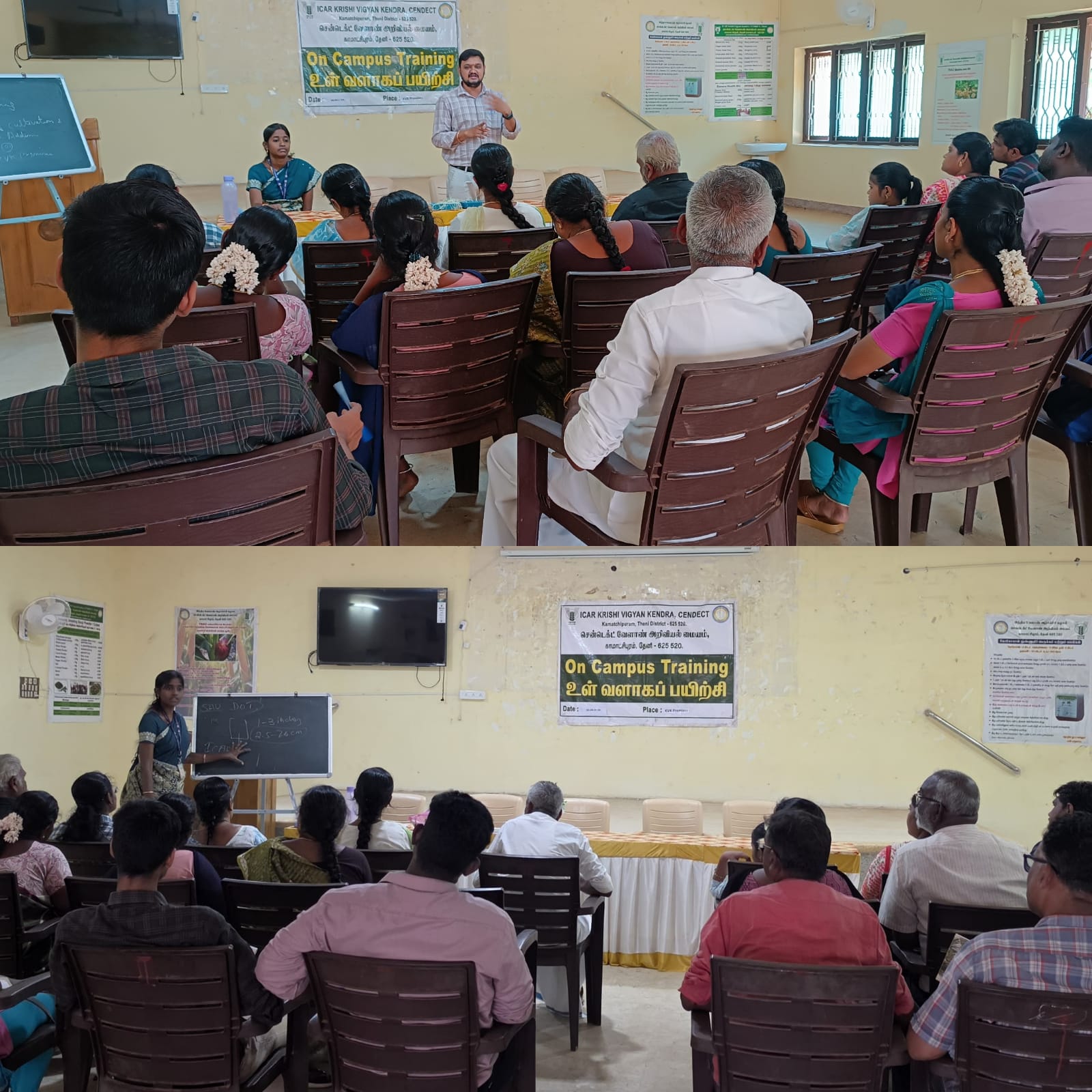
Conducted FLD Training on Microgreen Cultivation and Value Addition (Action Plan 2026–27, S.No. 12.1.5 (v), Page No. 83).
• The inaugural address was given by M. Arunraj, Programme Coordinator (i/c), explained the mandated activities of KVK, importance of soil and water testing, soil health and nutrient management and the impact of El Niño on agriculture.
• Handled a technical session on Microgreens: Emerging Functional Food Crop, importance of microgreen cultivation, nutritional composition, potential beneficial effects, unique characteristics and key differences between microgreens and mature greens.
• Explained microgreen growing conditions, including indoor and outdoor cultivation, harvesting, packaging, value added products and future trends
• Demonstrated and hand on training on microgreen cultivation techniques and explained the entrepreneurial potential of microgreen production, including business opportunities, licensing, branding and marketing strategies.
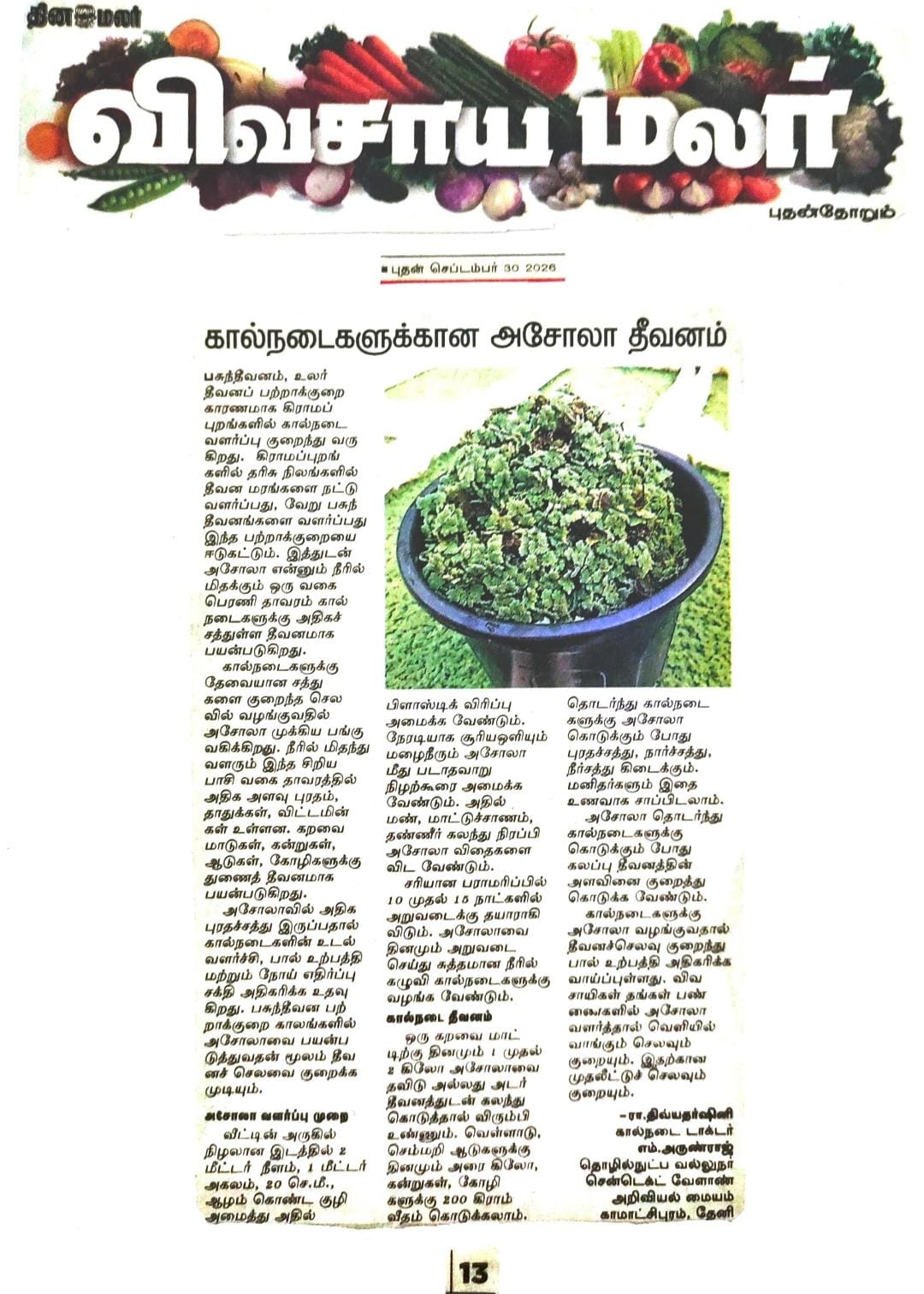
Published popular article
Event Details:
Published popular article