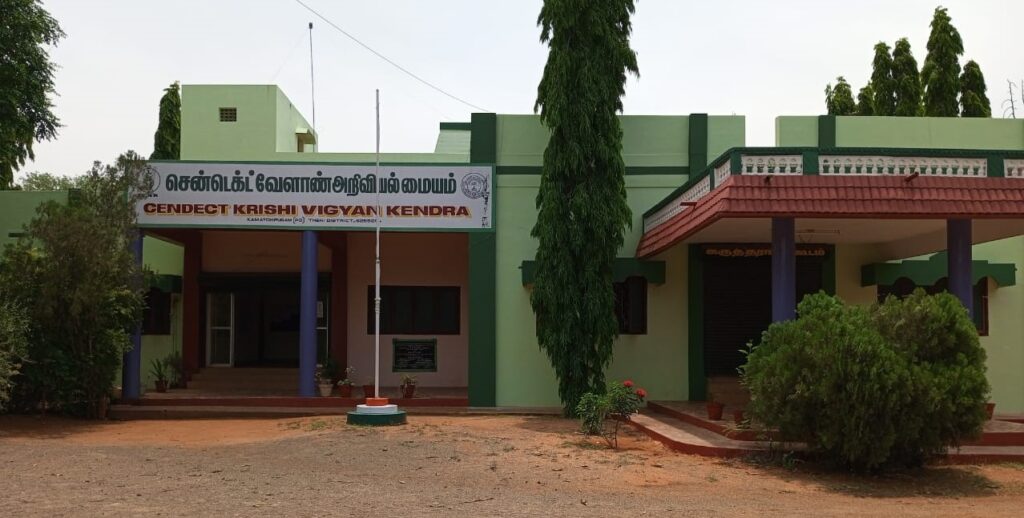
Krishi Vigyan Kendra (Farm Science Centre) in India is a unique system of technology transfer. Started its service on 21st March 1974 at Puducherry, the first KVK in India, grown to 731 KVKs in 2023. As the frontline extension system, KVKs have their footprint in every successful technology developed by institutions and adopted by farmers.... |
Hon’ble
Prime Minister
Hon’ble Minister of
Agriculture & Farmers Welfare
Secretary (DARE)
& Director General (ICAR)
![]() |
![]() |
![]() |
Indian Council of Agricultural Research (ICAR), Government of India mandated the establishment of Krishi Vigyan Kendras as grassroots level Farm Science Centres to provide various types of farm support activities like technology dissemination to farmers, training, awareness to achieve the set of objectives. KVK have made dent and has become part of decentralized planning and implementation instrument to achieve desired level of growth in agriculture and allied sector in the district.
KVK play a vital role in conducting on farm testing to demonstrate location specific agricultural technologies. KVK conducts demonstrations to prove the potential of various crops at farmers’ fields. Also conduct need based training programmes for the benefit of farmers and farm women, rural youths. KVK creates awareness about improved agricultural technologies through extension programmes. Critical and quality inputs like seeds, planting materials, organic products, bio fertilizers and livestock are produced by the KVK and made available to the farmers.
Technology assessment, refinement and demonstration of technology/products through the following activities of KVK.
- On-farm testing to identify the location specificity of agricultural technologies under various farming systems.
- Frontline demonstrations to establish its production potentials on the farmers’ fields.
- Training of farmers to update their knowledge and skills in modern agricultural technologies, and training of extension personnel to orient them in the frontier areas of technology development.
- To work as resource and knowledge centre of agricultural technology for supporting initiatives of public, private and voluntary sector for improving the agricultural economy of the district.
- In order to create awareness about improved technology, a large number of extension activities will be taken up.
- The seeds and planting materials produced by the KVKs will also be made available to the farmers.
Extension Activity – Dissemination of Technology (DoT) Meet
Event Details:
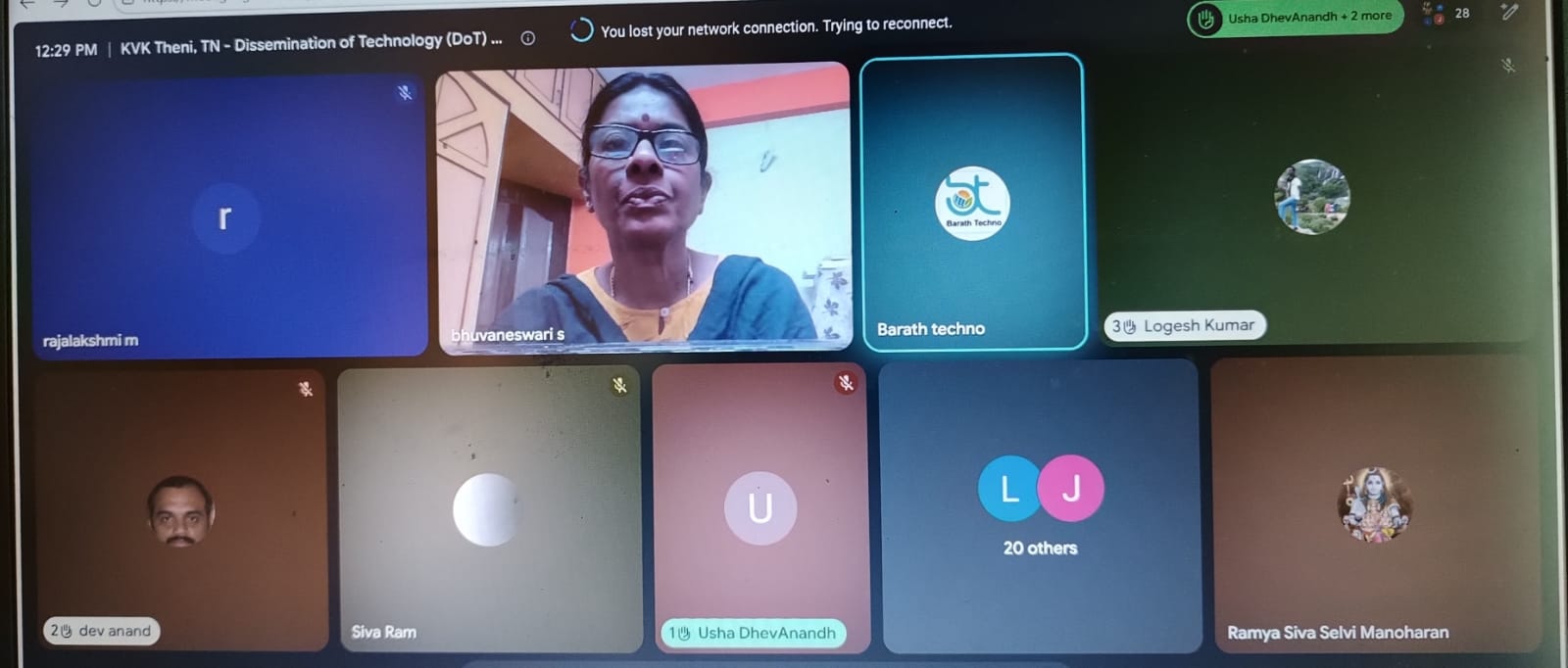
Conducted the Dissemination of Technology (DoT) Meet – Week 3 (One Week One Tech) on IIHR Arka High Humidity Storage Box for Enhancing the Shelf Life of Green Leafy Vegetables.
• The presidential address was delivered by Dr. P. Sivaram, Deputy Director, CENDECT, Theni District.
• The special address was given by Dr. S. Bhuvaneswari, Principal Scientist, Division of Post Harvest Technology and Agricultural Engineering, ICAR-IIHR, Bengaluru, who also handled a technical session on the IIHR Arka High Humidity Storage Box and explained its role in enhancing the shelf life of green leafy vegetables.
• M. Ramyasivaselvi, SMS (Home Science) delivered a lecture on the consumption pattern of fruits, vegetables and green leafy vegetables, highlighting their nutritional importance for nutrition security.
• R. Sugumar, Farmer cum Innovator, Bharath Techno, Cumbum, shared the success story of the IIHR Arka High Humidity Storage Box, emphasizing its practical utility and benefits for farmers, vendors and entrepreneurs.
Extension functionaries training
Event Details:
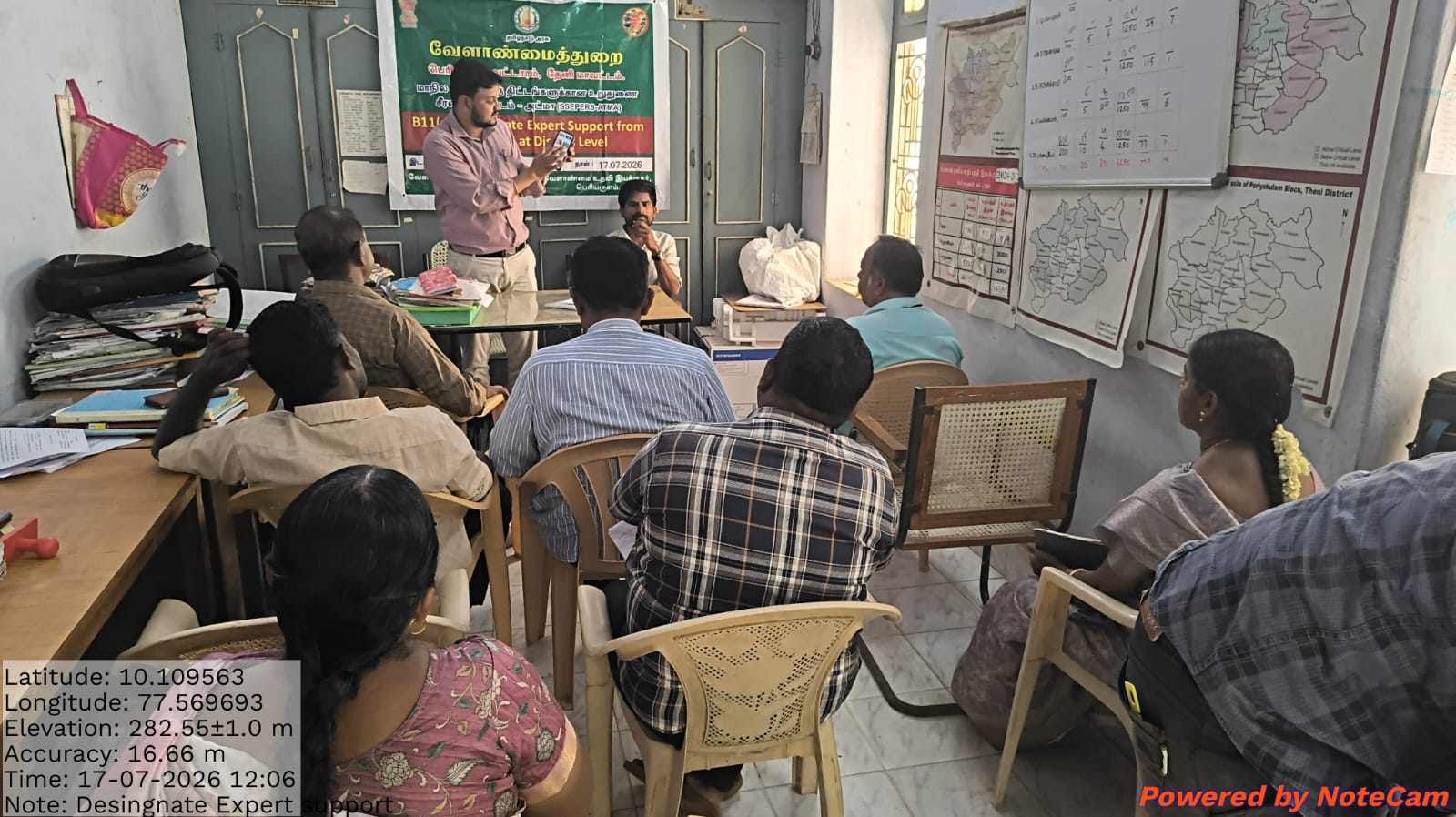
1. A training programme was organised for extension functionaries including Agricultural Officers (AOs) and Assistant Agricultural Officers (AAOs) strengthen their technical knowledge and enhance their capacity to disseminate climate resilient agricultural technologies among farmers.
2. The training programme focused on the scientific use of crop boosters, recent agricultural technologies, drought management strategies and the impact of El Nino on crop production.
3. The programme aimed to strengthen the capacity of field-level officials for effective dissemination of recommended technologies among farmers during the Kharif season.
4. We have explained about drought management covered moisture conservation techniques, mulching, rainwater harvesting, farm ponds, conservation furrows, use of drought tolerant crop varieties, contingency crop planning and efficient irrigation methods.